The Milky Way
Components of the Milky Way Galaxy - A spiral galaxy like the Milky Way has 3 basic components to its visible matter: (1) the disk (containing the spiral arms), (2) the halo, and (3) the nucleus or central bulge. These components are indicated schematically.
Galaxies: The Milky Way - This site provides a collection of images and information about our galaxy. The site is pare of the popular "Astronomy Picture of the Day" series.
MAP Cosmology 101 - The Milky Way - This page contains some basic information about the Milky Way Galaxy and the "MAP" mission. MAP is a NASA Explorer mission that will measure the temperature of the cosmic background radiation over the full sky with unprecedented accuracy.
Nebulae in the Milky Way - This site describes diffuse nebulae, planetary nebulae and supernova remnants. It also contains links to hundreds of images.
Orbit of the Sun in the Milky Way - Our whole solar system - orbits around the center of the Milky Way Galaxy. We are moving at an average velocity of 828,000 km/hr. But even at that high rate, it still takes us about 230 million years to make one complete orbit around the Milky Way.
Our Own Galaxy: The Milky Way - This site outlines the three main components of our fairly large spiral galaxy: a disk, in which the solar system resides, a central bulge at the core, and an all encompassing halo.
Population I and II Stars - The globular clusters of the Galactic halo and the galactic clusters of the disk represent two distinct populations of stars. Each population has a distinct history.
Rotation Curve of the Milky Way Galaxy - The observed rotation curve can be decomposed into the individual parts contributed by each component of the Galaxy: the disk, bulge + stellar halo, and the rest of total mass is what is called dark matter---material that does not emit any light (at least it is too faint to be detected yet) but has a significant amount of gravitational influence.
Star Clusters in the Milky Way - Globular clusters are gravitationally bound concentrations of approximately ten thousand to one million stars. They populate the halo or bulge of the Milky Way and other galaxies with a significant concentration toward the Galactic Center. Open (or galactic) clusters are physically related groups of stars held together by mutual gravitational attraction. They are believed to originate from large cosmic gas/dust clouds in the Milky Way, and to continue to orbit the galaxy through the disk.
Stellar Populations - Stars are generally classed into two main groups called Population I and Population II. The stars of the two populations are very similar. They all burn elements through fusion in the same way and follow the same evolution sequence. However, there are important differences in their characteristics which distinguish the two groups; one of the main differences lies in the metal content of the stars in each group.
The Interstellar Medium - The region between the stars in a galaxy like the Milky Way is far from empty. These regions have very low densities (they constitute a vacuum far better than can be produced artificially on the surface of the Earth), but are filled with gas, dust, magnetic fields, and charged particles. This is commonly termed the interstellar medium.
The Milky Way Galaxy - Zoom Astronomy - Our solar system is located in the outer reaches of the Milky Way Galaxy, which is a spiral galaxy. The Milky Way Galaxy contains roughly 200 billion stars. Most of these stars are not visible from Earth. Almost everything that we can see in the sky belongs to the Milky Way Galaxy.
The Milky Way's Black Hole - An international team of astronomers [2], lead by researchers at the Max-Planck Institute for Extraterrestrial Physics (MPE), has directly observed an otherwise normal star orbiting the supermassive black hole at the center of the Milky Way Galaxy.
Virtual Reality Milky Way Panorama - Check out this Virtual Reality Milky Way Panorama by Dr.Axel Mellinger. Click and move the mouse to pan and tilt. While panning, use control and shift keys to zoom in and out.
Virtual Universe: Milky Way Galaxy - This computer model was Monte Carlo sampled to produce these VRML models of the Milky Way Galaxy, which are available with 40,000 and 4,000 stars with the appropriate distribution of 15 spectral types.
Types of Galaxies
Astrophoto Index - This site contains a large collection of images of galaxies, star clusters, and nebulae.
Classification of Galaxies - Galaxies come in a great variety of shapes and sizes but can be instantly classified into two main types just by looking at them. Classification by appearance is what astronomers call a morphological classification scheme and nearly all galaxies are either elliptical or spiral in appearance.
Colliding Galaxies - There are many instances where galaxies appear to be interacting with each other enough to cause obvious distortions of the galaxies that interact. These interactions may have a significant connections with the manner in which galaxies evolve with time.
Colliding Galaxies and the Fate of the Milky Way - The Hubble Space Telescope images provided a detailed look at the "fireworks show" showing a collision between two galaxies where it was claimed that "over 1,000 bright, young star clusters were seen "bursting to life" as a result of the head-on wreck."
Elliptical Galaxies - Many galaxies take the form of ellipsoids, with no spiral structure or flattened disks. Elliptical galaxies constitute approximately 10% of observed galaxies.
Galactic Evolution - Evolution of galaxies has been a concern of astronomers for a long time. Ever since it was realized that stars are not eternal and evolve, people have asked the question how galaxies themselves evolve with a changing star population.
Galaxy Clusters and Large-Scale Structure - Galaxies are preferentially found in groups or larger agglomerations called clusters. The Local Group consists of our own galaxy, the larger spiral galaxy Andromeda (M31) and several smaller satellites, including the Large and Small Magellenic Clouds.
Hubble's Tuning Fork Diagram - After he discovered what galaxies really were, Edwin Hubble became the first person to classify galaxies. Astronomers use his system, called the "Hubble Tuning Fork," even today.
Irregular Galaxies - Approximately 3% of galaxies observed cannot be classified as either ellipsoidal or spirals. These galaxies have little symmetry in their structure and are termed irregular galaxies.
Large scale structure of the Cosmos - Stars are organized into galaxies which in turn appear to form clusters and superclusters, separated by voids. Prior to 1989 it was commonly assumed that the superclusters were the largest structures in existence, and that they were distributed more-or-less uniformly throughout the universe in every direction.
Messier Catalog - SEDS - A wonderful collection images and information about of the galaxies, star clusters and nebulae of the Messier Catalog provided by the Students for the Exploration and Development of Space (SEDS).
New General Catalog - SEDS - Images and information about of the galaxies, star clusters and nebulae of the New General Catalog provided by the Students for the Exploration and Development of Space (SEDS).
Spiral Galaxies - Galaxies come in a variety of shapes, with the shapes depending in a way not yet completely understood on the evolution of the galaxies. More than half of all observed galaxies are spiral galaxies.
The Hubble Classification - Hubble introduced the classification scheme illustrated in the following figure, which separates most galaxies into elliptical, normal spiral, and barred spiral categories, and then sub-classifies these categories with respect to properties such as the amount of flattening for elliptical galaxies and the nature of the arms for spiral galaxies. The galaxies that do not fit into these categories are classified separately as irregular galaxies.
The Magellanic Clouds - Images of our galaxy's brightest satellite systems are the Magellanic Clouds, obvious naked-eye objects deep in the southern skies.
The Andromeda Galaxy
Atlas of the Andromeda Galaxy - The purpose of this atlas is to make future exploration of this galaxy easier by mapping out some of the thousands of objects of various kinds that have been identified in it and by giving photographic and photometric data that will aid in planning and understanding new research.
DIRECT - Detached, double-line, spectroscopic, eclipsing binaries. The project is called DIRECT, which is fair enough. It should also be qualified as "difficult," but is coming along on schedule, with samples of suitable systems identified in M31 and M33.
Fletcher Photos - Andromeda Galaxy - Tri-color image on Technical Pan film - 8" f/4.5 Newtonian telescope - photo © Bill and Sally Fletcher. The Andromeda Galaxy is like an "island in space" made of more than a hundred billion stars. Lying 2 1/2 million light years away, it's the closest large companion to our own Milky Way galaxy.
Jack Schmidling's M31 page - The following photos make up an album of Jack Schmidling's favorite deep sky subject. They were taken with several different telescopes and cameras.
M31 images from the INT - Nucleus of M31, direct photograph, obtained by David Malin with the Isaac Newton Telescope.
Messier Object 31 - M31 is the famous Andromeda galaxy, our nearest large neighbor galaxy, forming the Local Group of galaxies together with its companions (including M32 and M110, two bright dwarf elliptical galaxies), our Milky Way and its companions, M33, and others.
NED Data of M31 - These data were downloaded from the NASA/IPAC Extragalactic Database (NED). The NED database contains most up-to-date data, plus references.
Observing Reports for M31 - Observing Reports for M31 from IAAC Netastrocatalog. The Internet Amateur Astronomers Catalog (IAAC or 'netastrocatalog' for short) is a forum for amateur astronomers at all levels to share their observations of Deep-Sky objects.
SIMBAD Data for M31 - The SIMBAD astronomical database provides basic data, cross-identifications and bibliography for astronomical objects outside the solar system.
Quasars and Active Galaxies
Active Galactic Nuclei - This site contains images, spectra, light curves, resources and references for active galactic nuclei.
Active Galaxies - Some galaxies exhibit evidence of extremely violent processes taking place within them. The most common signatures are non-thermal emission from the rf to X-ray region of the spectrum, and/or jets and unusual structure associated with the visual appearance of the galaxy.
Active Galaxies and Quasars - For "normal" galaxies, we can think of the total energy they emit as the sum of the emission from each of the stars found in the galaxy. For the "active" galaxies, this is not true. There is a great deal more emitted energy than there should be.
Blazars - Blazars are a special kind of active galaxy characterized by very rapid variability, high and variable polarization, superluminal motion, and very high luminosities - in short they are the most ``active'' kind of Active Galactic Nuclei.
Gravitational Lensing - One important consequence of the influence of Einstein's gravitation on light is that gravitational masses can alter the direction of light and cause lensing effects.
Quasars - These objects were named Quasistellar Radio Sources (meaning "star-like radio sources") which was soon contracted to quasars.
Radio Galaxies - Radio galaxies are usually elliptical. They often exhibit jet structure from a compact nucleus. They typically exhibit two lobes of radio frequency emission that are often approximately aligned with the jets observed in the visible spectrum and that may extend for millions of light years.
Seyfert Galaxies - Seyfert galaxies are usually (but not always) spirals with very bright (almost starlike) nuclei. They exhibit a strong continuum from IR through X-ray regions of the spectrum, with emission lines that are sometimes variable.
Cosmology and the Big Bang
Astronomy and Cosmology - The author of this web site focuses on making complex subjects presentable in an easy-to-read comprehensible form utilizing comparisons and graphical aids.
Big Bang Cosmology - Here's a series of questions and answers from "Ask the Space Scientist" about the big bang and cosmology.
Cosmic Journeys - What powered the Big Bang? What is the Universe made of? What is the nature of space and time? These are the key questions that Cosmic Journeys seeks to answer.
Cosmology - This introductory cosmology site offering virtual courses, multimedia activities, and forums
Cosmology and What Happened Before the Big Bang - Readers can learn theories about the creation of the universe with this collection of essays by Dr. Sten Odenwald. This web site was developed by Dr. Sten Odenwald, an astrophysicist working with Raytheon ITSS at the Goddard Space Flight Center in Maryland.
Dark Matter - There are many reasons to believe that the universe is full of "dark matter", matter that influences the evolution of the universe gravitationally, but is not seen directly in our present observations.
Edwin Hubble - Edwin Hubble was a man who changed our view of the Universe. In 1929 he showed that galaxies are moving away from us with a speed proportional to their distance. The explanation is simple, but revolutionary: the Universe is expanding.
Hubble's Law - In the 1930's, Edwin Hubble discovered that all galaxies have a positive redshift. In other words, all galaxies were receding from the Milky Way.
Hubble's Law - The Hubble constant H is one of the most important numbers in cosmology because it may be used to estimate the size and age of the Universe. It indicates the rate at which the universe is expanding.
Stephen Hawking - This PBS site provides a biography of Stephen Hawking. In 1988 Hawking wrote A Brief History of Time: From the Big Bang to Black Holes, explaining the evolution of his thinking about the cosmos for a general audience.
String Theory - String theory is at this moment the most promising candidate theory for a unified description of the fundamental particles and forces in nature including gravity.
Superstring Theory - Superstring theory resolves the most enigmatic problem of twentieth century theoretical physics: the mathematical incompatibility of the foundational pillars of quantum mechanics and the General Theory of Relativity.
The Official String Theory Web Site - Take a tour through the chain of physical events that cosmologists believe occurred while the expanding Universe we observe today was very small and very young.
The Physical Universe - This chapter provides an overview of our current understanding of the nature of the physical Universe. This site considers the large-scale distribution of matter in the Universe, its present expansion and past evolution (the history of the `Hot Big Bang'), and its possible futures. This is the larger environment in which we exist.
Universe: Cosmology 101 - This web page provides an introduction to cosmology. Cosmology is the scientific study of the large scale properties of the Universe as a whole.
What is Theoretical Cosmology? - This sie offers an introduction to the Cosmic Microwave Background, galaxy clusters, large scale structures, gravitational lensing, and other factors.
Life in the Universe
ABC News.com: Are We Alone? - The X-Files and UFO sightings notwithstanding, aliens are not here. But are they out there somewhere in the galaxy? With the advent of radio technology this century, scientists now have some hope of finding aliens without them dropping in and waving hello.
Drake's Equation - The Drake Equation was developed by Frank Drake in 1961 as a way to focus on the factors which determine how many intelligent, communicating civilizations there are in our galaxy. This web site allows you to perform calculations with the Drake Equation (interactive).
How SETI Works - Howstuffworks looks at how radio telescopes work and how they are used for SETI searches, what the probabilities of detecting alien life are, what might happen if or when such a signal is detected and how you can participate in SETI yourself.
Radio Bubble and SETI - Radio communication was only invented around 70 years ago so the first radiation (which was extremely weak) has only had a chance to travel 70 ly from the Earth in this time - in this way we can imagine the Earth to be surrounded by a radio bubble of radius 70 ly which is expanding at the speed of light.
SETI Institute - The mission of the SETI Institute is to explore, understand and explain the origin, nature and prevalence of life in the universe.
SETI: Searching for Life - Sky Publishing provides this very informative site dealing that contains news and background on the Search for ExtraTerrestrial Intelligence.
SETI@home- SETI@home is a scientific experiment that uses Internet-connected computers in the Search for Extraterrestrial Intelligence (SETI). You can participate by running a free program that downloads and analyzes radio telescope data.
Astronomy Software Collection
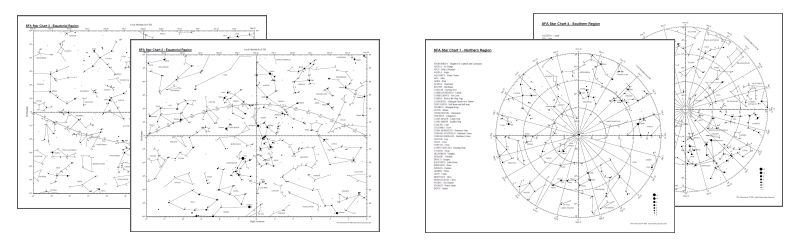
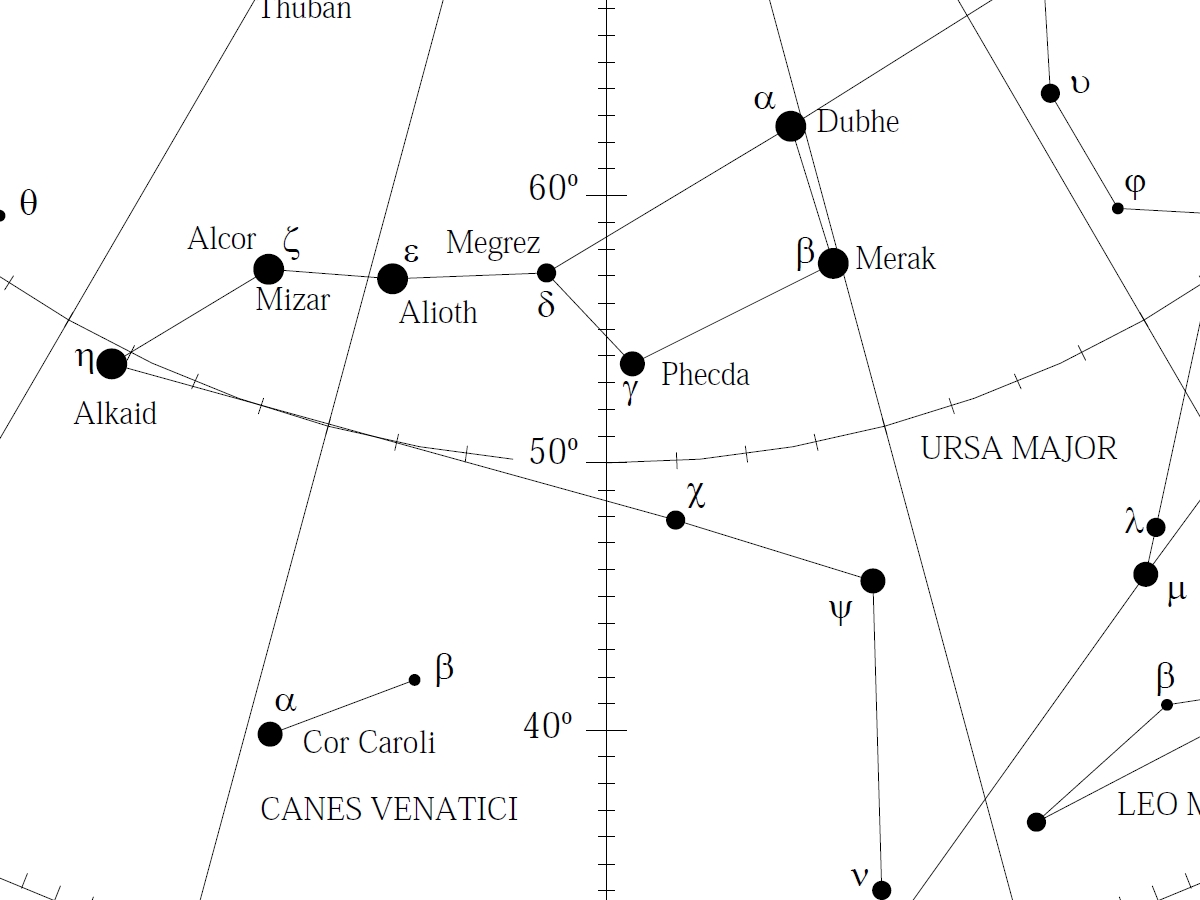
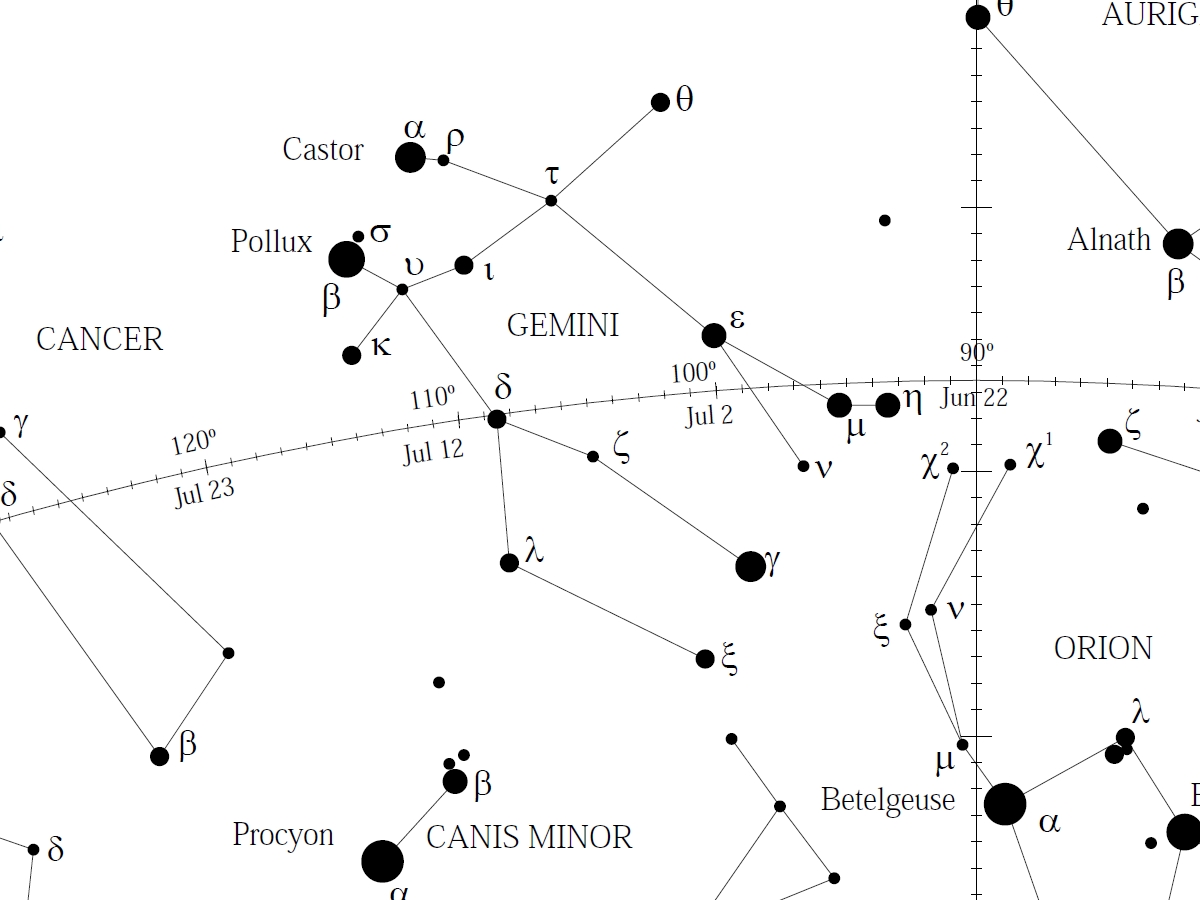
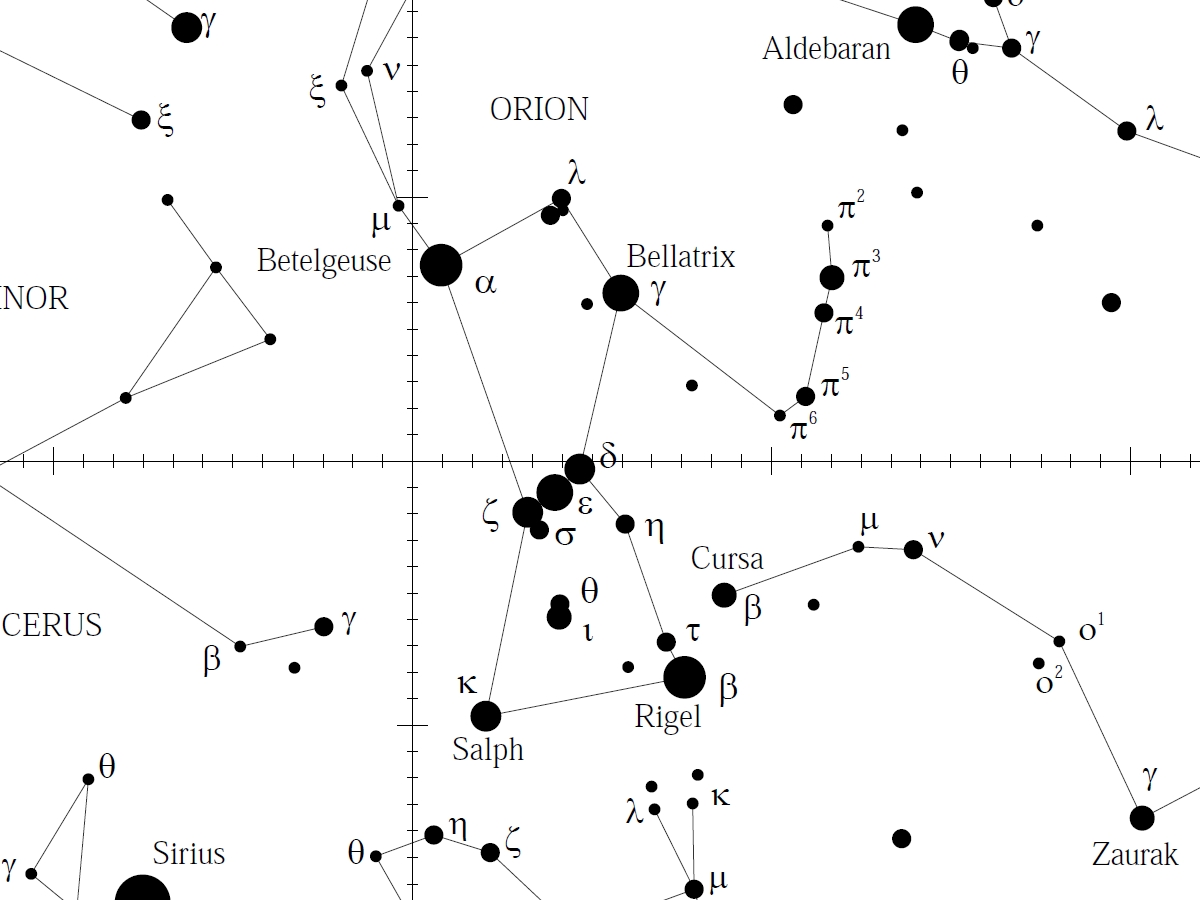
- Free SFA Star Charts
- Astronomy Orb
- Mars
- Jupiter
- Saturn
- SL9
- Eclipsing Binary Stars
- Color Science
- Astronomy JavaScript
- Movie Collection
- Stepper Motors