The Sun
Astronomy Picture of the Day: The Sun - Each day a different image or photograph of our fascinating universe is featured, along with a brief explanation written by a professional astronomer.
Big Bear Solar Observatory - The Big Bear Solar Observatory (BBSO) located in Big Bear Lake, Ca. offers daily images of the sun, a tour of the observatory, and various movies (MPEG), images, and links related to solar astronomy.
Chromosphere - The chromosphere is an irregular layer above the photosphere where the temperature rises from 6000° C to about 20,000° C. Learn more about this layer of the Sun at this site.
Chromosphere of the Sun - The gases of the Sun extend far beyond the photosphere, which may be considered the lowest level of the solar atmosphere. The region immediately above the photosphere is called the chromosphere.
Granulation of the Photosphere - The photosphere under close observation exhibits a mottled appearance that is called granulation. This is a consequence of heat convection below the photosphere.
Helioseismology - Over the last 15 years or so a new approach has emerged that provides a means of making direct measurements of the internal structure and dynamics of the Sun and, ultimately, other stars as well. The discovery of propagating sound waves in the Sun in the 1960's and their explanation in the 1970's has led to the development of this exciting new technique called helioseismology.
How the Sun Works - Howstuffworks examines the fascinating world of our nearest star. They look at the parts of the sun, the amazing way it makes light and heat, and its major features.
Magnetic Field of the Sun - The Sun has a strong and complex magnetic field, and much solar activity appears to be directly connected with the properties of the magnetic field.
National Solar Observatory - Find out how to submit a proposal, view images from telescopes, or read FAQ. Located at Sacramento Peak, in Sunspot, New Mexico.
Photosphere - The Sun is a ball of gas, so it does not have a well-defined surface. When we speak of the surface of the Sun, we normally mean the photosphere.
Prominences and Plages - Prominences and plages are structures that occur above the photosphere of the Sun. Plages are bright cloud-like features found around sunspots that represent regions of higher temperature and density within the chromosphere. Prominences are features that may reach high into the corona, often as graceful loops that may hang suspended for many days.
Proton-Proton Chain - This web site describes the proton-proton chain reaction that takes place in the core of the sun.
Solar Corona - The extended outer atmosphere of the Sun is called the corona. It has a temperature of millions of degrees, but it is 10 billion times less dense than the atmosphere of the Earth at sea level.
Solar Corona - The Corona is the Sun's outer atmosphere. It is visible during total eclipses of the Sun as a pearly white crown surrounding the Sun. Read more about it and view images at this site.
Solar Flares - The Sun Celebrates Bastille Day! The most violent events on the surface of the Sun are sudden eruptions called solar flares. Flares typically last a few minutes and can release energies equivalent to millions of hydrogen bombs.
Solar Neutrino Problem - For more than twenty years, the Homestake Solar Neutrino Experiment in the Homestake Gold Mine in South Dakota has been attempting to measure neutrino fluxes from space; in particular, this experiment has been gathering information on solar neutrino fluxes. The results of this experiment have been checked against predictions made by standard solar models and it has been discovered that only one-third of the expected solar neutrino flux has been detected. This "Where are the missing neutrinos?" question is known as the Solar Neutrino Problem.
Solar Wind - The Sun makes itself known throughout much of the Solar System by the influence the solar wind of high-speed charged particles constantly blowing off the Sun. The solar wind may be viewed as an extension of the outer atmosphere of the Sun (the corona) into interplanetary space.
Solar Wind - The solar wind streams off of the Sun in all directions at speeds of about 400 km/s (about 1 million miles per hour). The source of the solar wind is the Sun's hot corona.
Stanford Solar Center - This site presents a collection of fun educational activities based on Solar Oscillations Investigation (SOI) and Solar and Heliospheric Observatory (SOHO) data. Students can explore the Sun's tangled magnetic field, its turbulent surface motions, the dramatic sunspot cycle, and even what magic happens in the solar interior where instrumental eyes cannot penetrate.
Sunspot Cycle - In 1610, shortly after viewing the sun with his new telescope, Galileo Galilei made the first European observations of Sunspots. Daily observations were started at the Zurich Observatory in 1749 and with the addition of other observatories continuous observations were obtained starting in 1849.
Sunspot Cycle - Sunspots have been monitored since the time of Galileo. One striking feature that emerges from the long-term data is that the number of sunspots observed in a given year varies in a dramatic and highly predictable way.
The Relationship between the Solar Cycle Length and Tree-Ring Index Values - A.E. Douglas, who started the tree ring laboratory at the University of Arizona, discovered that tree rings from the years of the Maunder Minimum were remarkably even. He began to search for proof that the sunspot cycle causes changes in the weather on the Earth. To date, not enough evidence from tree rings has been collected to prove or disprove a connection.
The Solar Interior - The solar interior is separated into four regions by the different processes that occur there. Learn more about these layers at this site.
The Solar Spectrum - The solar spectrum consists of a continuum with thousands of dark absorption lines superposed. The lines are called the Frauenhofer lines, and the solar spectrum is sometimes called the Frauenhofer spectrum. These lines are produced primarily in the photosphere.
The Sun - The Nine Planets - The Nine Planets is an overview of the history, mythology, and current scientific knowledge of each of the planets and moons in our solar system. Each page has text and images, some have sounds and movies, most provide references to additional related information.
What makes the sun shine? - The simple answer is that deep inside the core of the Sun, enough protons can collide into each other with enough speed that they stick together to form a helium nucleus and generate a tremendous amount of energy at the same time. This process is called nuclear fusion. Every second, a star like our Sun converts 4 million tons of its material into heat and light through the process of nuclear fusion.
Zeeman Effect - The atomic energy levels, the transitions between these levels, and the associated spectral lines discussed to this point have implicitly assumed that there are no magnetic fields influencing the atom. If there are magnetic fields present, the atomic energy levels are split into a larger number of levels and the spectral lines are also split. This splitting is called the Zeeman Effect.
Mercury
Astronomy Picture of the Day: Mercury - Each day a different image or photograph of our fascinating universe is featured, along with a brief explanation written by a professional astronomer.
Mariner 10 Spacecraft - Launched in November 1973, this mission provided new information about Mercury and Venus in the Mariner program's first dual-planet mission.
Mercury - StarDate - Mercury is often visible near the rising or setting Sun as the morning or evening star. Mercury completes three full turns on its axis for every two orbits around the Sun.
Mercury - The Nine Planets - The Nine Planets is an overview of the history, mythology, and current scientific knowledge of each of the planets and moons in our solar system. Each page has text and images, some have sounds and movies, most provide references to additional related information.
Mercury Unveiled - Mercury Unveiled takes a new look at the Mariner 10 data. New analysis of data returned by the Mariner 10 mission in 1974 and 1975 reveals a surface with lava flows and deposits from explosive volcanic eruptions, variations in composition across its surface and into its crust, and a different chemical composition from the other inner planets.
Mercury's Odd Rotation - Although Mercury is not tidally locked to the Sun, its rotational period is tidally coupled to its orbital period. Mercury rotates one and a half times during each orbit. Because of this 3:2 resonance, a day on Mercury (sun rise to sun rise) is 176 Earth days long.
The Surface and Interior of Mercury - Speaking loosely, we may characterize Mercury as being much like the Earth on the inside and much like the Moon on the outside. However, the analogies cannot be pushed too far. For example, the detailed early history of the surface was probably different for Mercury than for the Moon.
Venus
Astronomy Picture of the Day: Venus - Each day a different image or photograph of our fascinating universe is featured, along with a brief explanation written by a professional astronomer.
Magellan Spacecraft - NASA's Magellan spacecraft made a dramatic conclusion to its highly successful mission at Venus when it is commanded to plunge into the planet's dense atmosphere Tuesday, October 11, 1994. During its four years in orbit around Earth's sister planet, the spacecraft has radar-mapped 98 percent of the surface and collected high-resolution gravity data of Venus.
Mariner 2 Spacecraft - Mariner 2 was the first spacecraft to fly by another planet. The spacecraft passed within 34,762 kilometers (about 21,600 miles) of Venus, discovering the planet's slow retrograde rotation (turning the opposite direction of its orbit around our Sun).
Runaway Greenhouse Effect - Certain gases like carbon dioxide and water vapor (and many others) have the property that they are essentially transparent to visible light but absorb IR radiation very strongly. Such compounds are sometimes termed greenhouse gases because, if they are present in a planetary atmosphere, they absorb the scattered IR radiation and tend to raise the temperature of the atmosphere by trapping solar energy.
The Atmosphere of Venus - Missions to the surface of Venus (Russian Venera spacecraft) indicate that the cloud deck begins about 50 km above the surface. Spectral analysis of the thick cloud layer surrounding Venus suggests that the clouds are largly composed of sulphuric acid droplets.
The Planet Venus - Until the 1960s, Venus was often considered a "twin sister" to the Earth because Venus is the nearest planet to us, and because superficially the two planets seem to share many characteristics.
The Surface Features of Venus - The surface of Venus is rather smooth in many places, though not nearly as smooth as originally expected . However, we find evidence for many of the same geological features found on Earth: canyons, volcanoes, lava flows, rift valleys, mountains, craters, and plains.
Venus - The Nine Planets - The Nine Planets is an overview of the history, mythology, and current scientific knowledge of each of the planets and moons in our solar system. Each page has text and images, some have sounds and movies, most provide references to additional related information.
Venus Fact Sheet - Contains the mass, volume, escape velocity, orbital elements, spin rate, and many other parameters.
Venusian Impact Craters - Impact craters are found to be distributed randomly but uniformly over the surface of Venus. Cratering of the terrestrial planets shows a record of two distinct periods, one from the late period of heavy bombardment and the other from a bombardment of asteroids and comets which occurred more recently.
Volcanic Features of Venus - Magellan SAR images show that volcanic features are abundant and widely distributed on Venus. Notable features include widespread, mostly lowland lava plains, extensive flows, lava channels, small shields, cones, domes, intermediate to large shields, and caldera-like structures not associated with shield volcanoes.
Earth
Astronomy Picture of the Day: Earth - Each day a different image or photograph of our fascinating universe is featured, along with a brief explanation written by a professional astronomer.
Auroras - The aurora, or northern and southern lights, are often visible from the surface of the Earth at high northern or southern latitudes. Auroras typically appear as luminous bands or streamers that can extend to altitudes of 200 miles (well into the ionosphere).
Coriolis Effect - Coriolis effect is an inertial force described by the 19th-century French engineer-mathematician Gustave-Gaspard Coriolis in 1835. Coriolis showed that, if the ordinary Newtonian laws of motion of bodies are to be used in a rotating frame of reference, an inertial force--acting to the right of the direction of body motion for counterclockwise rotation of the reference frame or to the left for clockwise rotation--must be included in the equations of motion.
Earth - The Nine Planets - The Nine Planets is an overview of the history, mythology, and current scientific knowledge of each of the planets and moons in our solar system. Each page has text and images, some have sounds and movies, most provide references to additional related information.
Earth Fact Sheet - Contains the mass, volume, escape velocity, orbital elements, spin rate, and many other parameters.
Foucault Pendulum - The Foucault Pendulum was the first terrestrial device to demonstrate the rotation of the earth. The California Academy of Science has been creating the Foucault Pendulum for educational and commercial institutions since 1951.
Foucault Pendulum - The Foucault Pendulum is named for the French physicist Jean Foucault (pronounced "Foo-koh), who first used it in 1851 to demonstrate the rotation of the earth. It was the first satisfactory demonstration of the earth's rotation using laboratory apparatus rather than astronomical observations.
Global Warming - This EPA site has information and resources on a changing atmosphere and climate, emissions and greenhouse gases, the potential impacts of global warming, and what can be done about it.
Interior of the Earth - The study of the Earth's surface and interior is the domain of geology. We know little directly about the interior of the Earth. Most of our information in that regard has come from seismic waves, which are vibrations in the body of the Earth.
Plate Tectonics - It is now uniformly agreed that the crustal plates of the Earth are in horizontal motion. This is called continental drift colloquially, and plate tectonics (see also this summary) in technically more precise language. A great animation is shown on this page.
Precession of the Earth's Axis - The Earth's rotation axis is not fixed in space. Like a rotating toy top, the direction of the rotation axis executes a slow precession with a period of 26,000 years.
The Earth's Magnetosphere - The Earth has a substantial magnetic field, a fact of some historical importance because of the role of the magnetic compass in exploration of the planet.
The Greenhouse Effect - The greenhouse effect refers to circumstances where the short wavelengths of visible light from the sun pass through a transparent medium and are absorbed, but the longer wavelengths of the infrared re-radiation from the heated objects are unable to pass through that medium.
Van Allen Belts - These radiation belts are regions of high-energy particles, mainly protons and electrons, held captive by the magnetic influence of the Earth.
Why is the sky blue? - Howstuffworks provide the answer to this common question and provides related links.
The Moon
Apollo Lunar Surface Journal - This is a record of the lunar surface operations conducted by the six pairs of astronauts who landed on the Moon from 1969 through 1972, including transcripts, astronaut commentaries, and multimedia.
Are Apollo Moon Photos Fake? - Ian Williams Goddard has taken the time to replicate all the photographic 'anomalies' with little models showing how they're not anomalies at all. Highly recommended.
Full Moon Names - The Harvest Moon is always the full Moon closest to the autumnal equinox. If the Harvest Moon occurs in October, the September full Moon is usually called the Corn Moon. Source: The Old Farmer's Almanac. The names of the other full moons are also given.
Honeymoon - What is the origin of the Honeymoon tradition?
Lunar Eclipses - During a total lunar eclipse the Moon takes on a dark red color because it is being lighted slightly by sunlight passing through the Earth's atmosphere and this light has the blue component preferentially scattered out, leaving faint reddish light to illuminate the Moon during the eclipse.
Lunar Geology - Lunar Geology is the study of the moons crust, rocks, strata, etc. and tends to cover two broad areas of study; Maria (and/or Basins) and Highlands.
Lunar Maps - Click on the images to identify crates and maria.
Lunar Maria - This site shows a map of the major lunar maria. These maria range from over 200 km to about 1200 km in size.
Missions to the Moon - Links to the Apollo Project, Artemis Project, Clementine, Lunar Orbiter, Lunar Prospector, Surveyor, Ranger Experiments, and Soviet Experiments.
Moon - The Nine Planets - The Nine Planets is an overview of the history, mythology, and current scientific knowledge of each of the planets and moons in our solar system. Each page has text and images, some have sounds and movies, most provide references to additional related information.
Moon Fact Sheet - Contains the mass, volume, escape velocity, orbital elements, spin rate, and many other parameters.
Moon Hoax? - This site examines the theories that suggest the NASA Apollo moon landings were faked. It hopes to prove, without any doubt, that these theories are wrong and a combination of a poor understanding of basic science and a desire to make a fast buck.
Orbit and Phases of the Moon - The orbit of the Moon is very nearly circular (eccentricity ~ 0.05) with a mean separation from the Earth of about 384,000 km, which is about 60 Earth radii. The plane of the orbit is tilted about 5 degrees with respect to the ecliptic plane. The Moon appears to go through a complete set of phases as viewed from the Earth because of its motion around the Earth, as illustrated in the figure on this web page.
Solar Eclipses - One consequence of the Moon's orbit about the Earth is that the Moon can shadow the Sun's light as viewed from the Earth, or the Moon can pass through the shadow cast by the Earth.
Surface Features of the Moon - The surface of the Moon has two hemispheres with rather asymmetric properties; as a consequence the nature of the Lunar surface that we can see from the Earth is substantially different from the surface that is always hidden from the Earth. View the near side, the farside and the Maria.
The Apollo Program - Apollo 11 was the first manned mission to land on the Moon. The first steps by humans on another planetary body were taken by Neil Armstrong and Buzz Aldrin on July 20, 1969.
The Moon's Interior - Before the Apollo missions we knew almost nothing about the interior of the Moon. The Apollo missions left seismometers on the lunar surface that have allowed us to deduce the general features of the Lunar interior by studying the seismic waves generated by "moonquakes" and occasional meteor impacts.
Theories of Formation for the Moon - An extremely important question is that of how the Moon was formed and came to have its present orbit around the Earth. There are five serious theories.
Tides - The tides at a given place in the Earth's oceans occur about an hour later each day. Since the Moon passes overhead about an hour later each day, it was long suspected that the Moon was associated with tides. Newton's Law of Gravitation provided a quantitative understanding of that association.
Volcanism on the Moon - The Moon has no large volcanoes like Hawaii or Mount St. Helens. However, vast plains of basaltic lavas cover much of the lunar surface.
Mars
*Martian Moon: Phobos - Phobos ("FOH bus") is the larger and innermost of Mars' two moons. Phobos is closer to its primary than any other moon in the solar system, less than 6000 km above the surface of Mars. It is also one of the smallest moons in the solar system.
*Martian Moon: Demos - Deimos ("DEE mos") is the smaller and outermost of Mars' two moons. It is the smallest known moon in the solar system.
Astronomy Picture of the Day: Mars - Each day a different image or photograph of our fascinating universe is featured, along with a brief explanation written by a professional astronomer.
Atmosphere and Interior of Mars - The atmosphere and the interior of Mars differ substantially from that of the Earth. The atmosphere is much less dense and of different composition, and it is unlikely that the core is molten.
Face on Mars - In July, 1976, Viking Orbiter 1 was acquiring images of the Cydonia region of Mars as part of the search for potential landing sites for Viking Lander 2. On 25 July, 1976, it photographed a region of buttes and mesas along the escarpment that separates heavily cratered highlands to the south from low lying, relatively crater-free, lowland plains to the north.
General Features of Mars - Mars has a rotational period of 24 hours and 37 minutes, a period for revolution about the sun of 687 days, and a diameter of 6800 km (about half that of Earth). This site has a rotating globe animation.
Life on Mars? - A team of scientists recently announced that they believe they have found evidence for ancient microbacterial life in a chunk of meteorite that came from the planet Mars. The startling news would be the first discovery of any form of life off the Earth. It could revolutionize our thoughts on the probability of life arising elsewhere in our solar system and the universe beyond, especially in the light of recent news about planetlike bodies detected around other stars.
Mars - The Nine Planets - The Nine Planets is an overview of the history, mythology, and current scientific knowledge of each of the planets and moons in our solar system. Each page has text and images, some have sounds and movies, most provide references to additional related information.
Mars Events - This page contains information about how to find Mars in the night sky, a list of missions to Mars, a links to other web sites.
Mars Exploration Homepage - Since our first close-up picture of Mars in 1965, spacecraft voyages to the Red Planet have revealed a world strangely familiar, yet different enough to challenge our perceptions of what makes a planet work. Every time we feel close to understanding Mars, new discoveries send us straight back to the drawing board to revise existing theories.
Mars Fact Sheet - Contains the mass, volume, escape velocity, orbital elements, spin rate, information about the moons of Mars, and many other parameters.
Mars Meteorites - Of the 22,000 or so meteorites that have been discovered on Earth, only 26 have been identified as originating from the planet Mars. These rare meteorites created a stir throughout the world when NASA announced in August 1996 that evidence of microfossils may be present in one of these Mars meteorites.
Mars Observing FAQ - Read answers to frequency asked questions about observing Mars with your telescope.
Mars Pathfinder - Mars Pathfinder was originally designed as a technology demonstration of a way to deliver an instrumented lander and a free-ranging robotic rover to the surface of the red planet. Pathfinder not only accomplished this goal but also returned an unprecedented amount of data and outlived its primary design life.
Surface Features of Mars - Mars has many interesting geological features on its surface that first became apparent with Mariner 9, were subsequently studied by the Viking missions, and many of which now are visible from the Hubble Space Telescope. These surface features include polar caps, enormous shield volcanoes, large canyon systems and running water erosion.
Viking Lander - In 1976 the Viking 1 and 2 landers undertook searches on the Martian surface for the chemical evidence of present or past life on Mars. The images shown give a picture of one of the backup landers, and two different views of the Martian surface as photographed from Viking 1.
Water Ice on Mars - Using instruments on NASA's 2001 Mars Odyssey spacecraft, surprised scientists have found enormous quantities of buried treasure lying just under the surface of Mars -- enough water ice to fill Lake Michigan twice over. And that may be only the tip of the iceberg.
Jupiter
*Jovian Moon: Callisto - Callisto ("ka LIS toh") is the eighth of Jupiter's known satellites and the second largest. It is the outermost of the Galilean moons.
*Jovian Moon: Europa - Europa ("yoo ROH puh") is the sixth of Jupiter's known satellites and the fourth largest; it is the second of the Galilean moons. Europa is slightly smaller than the Earth's Moon.
*Jovian Moon: Ganymede - Ganymede ("GAN uh meed") is the seventh and largest of Jupiter's known satellites. Ganymede is the third of the Galilean moons.
*Jovian Moon: Io - Io ("EYE oh") is the fifth of Jupiter's known satellites and the third largest; it is the innermost of the Galilean moons. Io is slightly larger than Earth's Moon.
*Jovian Recently Discovered Moons - Nearly two dozen small irregular jovian satellites have been discovered recently. This site gives a list of all the moons of Jupiter.
*Jupiter's Outer Moons - Jupiter's eight outer moons fall into two groups: Leda, Himalia, Lysithea and Elara at about 11 million km from Jupiter and Ananke, Carme, Pasiphae and Sinope at about 23 million km.
Astronomy Picture of the Day: Jupiter - Each day a different image or photograph of our fascinating universe is featured, along with a brief explanation written by a professional astronomer.
Atmosphere of Jupiter - Jupiter has a very complex atmosphere. It is dominated by colorful bands and turbulent swirls.
Galileo Spacecraft - Galileo is a NASA spacecraft mission to Jupiter, launched October 18, 1989, and designed to study the planet's atmosphere, satellites and surrounding magnetosphere for 2 years starting in December 1995. It was named for the Italian Renaissance scientist who discovered Jupiter's major moons in 1610 with the first astronomical telescope.
Great Red Spot - The Great Red Spot is a great anti-cyclonic (high pressure) storm akin to a hurricane on Earth, but it is enormous (three Earths would fit within its boundaries) and it has persisted for at least the 400 years that humans have observed it through telescopes.
Great Red Spot - These images were collected by Amy Simon (Cornell U.), Reta Beebe (NMSU), Heidi Hammel (Space Science Institute/MIT), their collaborators, and the Hubble Heritage team (AURA/STScI/NASA).
Jupiter - The Nine Planets - The Nine Planets is an overview of the history, mythology, and current scientific knowledge of each of the planets and moons in our solar system. Each page has text and images, some have sounds and movies, most provide references to additional related information.
Jupiter Events - This page contains information about how to find Jupiter in the night sky and how to find the Great Red Spot and the Galilean Satellites. It also has information about the 1994 collision of comet Shoemaker-Levy 9 with Jupiter.
Jupiter Fact Sheet - Contains the mass, volume, escape velocity, orbital elements, spin rate, information about the moons of Jupiter, and many other parameters.
Jupiter's Rings - The images on the page shows that Jupiter also has a ring, though it is extremely faint. The ring was discovered by Voyager I in 1979 and is at a radius of about 1.8 times the radius of the planet (which is inside the radius of the innermost moon). It seems to be composed of small (micron size) particles, probably from Io's volcanoes and from debris knocked off the inner moons by meteor impacts.
The Collision of Comet Shoemaker-Levy-9 with Jupiter - The shattered comet Shoemaker-Levy 9 collided with Jupiter over a 5.6 day period in July 1994. The first of 21 comet fragments hit Jupiter on July 16, 1994 and the last on July 22, 1994. This page offers answers to frequently asked questions.
The Interior of Jupiter - Most of the interior of Jupiter is liquid (primarily hydrogen and about 10% helium). The central temperatures are thought to lie in the 13,000-35,000 degree Celsius range, and the central pressure is about 100 million Earth atmospheres. We infer indirectly that the small core (perhaps a few tens of Earth masses) is rocky.
The Magnetic Field of Jupiter - Jupiter has a large, complex, and intense magnetic field that is thought to arise from electrical currents in the rapidly spinning metallic hydrogen interior.
Voyager Mission to Jupiter - NASA launched the two Voyager spacecraft to Jupiter, Saturn, Uranus, and Neptune in the late summer of 1977. Voyager 1's closest approach to Jupiter occurred March 5, 1979. Voyager 2's closest approach was July 9, 1979.
Saturn
*Saturn's Moon: Dione - Dione ("dy OH nee") is the twelfth of Saturn's known satellites. In Greek mythology Dione was the mother of Aphrodite (Venus) by Zeus (Jupiter). Dione was discovered by Cassini in 1684.
*Saturn's Moon: Endeladus - Enceladus ("en SEL a dus") is the eighth of Saturn's known satellites. In Greek mythology Enceladus was a Titan who was defeated in battle and buried under Mount Etna by Athena. It was discovered in 1789 by Herschel.
*Saturn's Moon: Iapetus - Iapetus ("eye AP i tus" ) is the seventeenth of Saturn's known satellites and the third largest. In Greek mythology Iapetus was a Titan, the son of Uranus, the father of Prometheus and Atlas and an ancestor of the human race. It was discovered by Cassini in 1671.
*Saturn's Moon: Mimas - Mimas ("MY mas") is the seventh of Saturn's known satellites and looks like the "Deathstar" from Star Wars.
*Saturn's Moon: Rhea - Rhea ("REE a") is the fourteenth of Saturn's known satellites and the second largest. In Greek mythology Rhea was the sister and wife of Cronus (Saturn) and the mother of Demeter, Hades (Pluto), Hera, Hestia, Poseidon (Neptune), and Zeus (Jupiter). It was discovered by Cassini in 1672.
*Saturn's Moon: Tethys - Tethys ("TEE this") is the ninth of Saturn's known satellites. In Greek mythology Tethys was a Titaness and sea goddess who was both sister and wife of Oceanus. It was discovered by Cassini in 1684.
*Saturn's Moon: Titan - It was long thought that Titan was the largest satellite in the solar system but recent observations have shown that Titan's atmosphere is so thick that its solid surface is slightly smaller than Ganymede's. Titan is nevertheless larger in diameter than Mercury and larger and more massive than Pluto.
*Saturn's Small Moons - We know next to nothing about these moons. Even the basic mass and size data are not very accurate.
Astronomy Picture of the Day: Saturn - Each day a different image or photograph of our fascinating universe is featured, along with a brief explanation written by a professional astronomer.
Cassini-Huygens Mission - The Cassini-Huygens Mission to Saturn and Titan is an international venture designed to explore Saturn, her rings, moons, and the vast surrounding region.
Roche Limit - Why don't the individual ring particles accumulate together to form a single satellite? The reason lies entirely in how the gravitational attraction between the planet and the ring particles compares with the ring particle's gravitational attraction to each other.
Saturn - The Nine Planets - The Nine Planets is an overview of the history, mythology, and current scientific knowledge of each of the planets and moons in our solar system. Each page has text and images, some have sounds and movies, most provide references to additional related information.
Saturn Events - This page contains information about how to find Saturn in the night sky and how to locate the moons of Saturn.
Saturn Fact Sheet - Contains the mass, volume, escape velocity, orbital elements, spin rate, information about the moons of Saturn, and many other parameters.
Saturn PC Software - This program displays the relative locations of Saturn's moons for a given date and time.
Saturn's Moons - The page shows a montage of 15 of Saturn's satellites (there are more than 15 satellite known today). These range in size from Titan, the second largest moon in the Solar System to small asteroid-like objects.
Saturn's Rings - The ring system of Saturn is divided into 5 major components: the G, F, A, B, and C rings, listed from outside to inside (but in reality, these major divisions are subdivided into thousands of individual ringlets). The F and G rings are thin and difficult to see, while the A, B, and C rings are broad and easily visible. The large gap between the A ring and the B ring is called the Cassini division.
The Surface and Interior of Saturn - The surface of Saturn bears many similarities with the surface of Jupiter, but the color contrast is generally less. This is thought to be due to Saturn being colder than Jupiter (further from the Sun), so it has different chemical reactions in its atmosphere, leading to different coloration.
Voyager Saturn Science Summary - The Voyager 1 and 2 Saturn encounters occurred nine months apart, in November 1980 and August 1981. Voyager 1 is leaving the solar system. Voyager 2 completed its encounter with Uranus in January 1986 and with Neptune in August 1989, and is now also en route out of the solar system.
Uranus
*Uranus' Moon: Ariel - Ariel's surface is a mixture of cratered terrain and systems of interconnected valleys hundreds of kilometers long and more than 10 km deep.
*Uranus' Moon: Miranda - Miranda's surface is all mixed up with heavily cratered terrain intermixed with weird grooves, valleys and cliffs.
*Uranus' Moon: Oberon - Oberon's heavily cratered surface has probably been stable since its formation. Some of the craters have rays of ejecta similar to those seen on Callisto. Some of the crater floors are dark, perhaps covered with darker material (dirty water?) that upwelled into the crater.
*Uranus' Moon: Titania - Titania's surface is a mixture of cratered terrain and systems of interconnected valleys hundreds of kilometers long. Some of the craters appear to be half-submerged.
*Uranus' Moon: Umbriel - Umbriel is very dark; it reflects only about half as much light as Ariel, Uranus' brightest satellite.
*Uranus' Small Moons - Uranus' innermost ten moons are Cordelia, Ophelia, Bianca, Cressida, Desdemona, Juliet, Portia, Rosalind, Belinda and Puck.
Astronomy Picture of the Day: Uranus - Each day a different image or photograph of our fascinating universe is featured, along with a brief explanation written by a professional astronomer.
Discovery of Uranus - This animation was taken from the NASA movie "I Will See Such Things". It was digitized by Calvin J. Hamilton. The video clip discusses the discovery of Uranus by William Herschel.
The Rings of Uranus - The rings were discovered from the Earth in 1977 when Uranus occulted (passed in front of) a star and it was noticed that there were dips in the brightness of the star before and after it passed behind the body of Uranus.
The Surface and Interior of Uranus - Uranus has a relatively featureless appearance at visible wavelengths. Even from Voyager 2 at a distance of 80,000 km there were few distinguishable features.
Uranus - The Nine Planets - The Nine Planets is an overview of the history, mythology, and current scientific knowledge of each of the planets and moons in our solar system. Each page has text and images, some have sounds and movies, most provide references to additional related information.
Uranus Fact Sheet - Contains the mass, volume, escape velocity, orbital elements, spin rate, information about the moons of Uranus, and many other parameters.
Voyager Mission to Uranus - NASA's Voyager 2 spacecraft flew closely past distant Uranus, the seventh planet from the Sun, in January 1986. At its closest, the spacecraft came within 81,500 kilometers (50,600 miles) of Uranus's cloudtops on Jan. 24, 1986.
Neptune
*Neptune's Moon: Nereid - Nereid's orbit is the most highly eccentric of any planet or satellite in the solar system; its distance from Neptune varies from 1,353,600 to 9,623,700 kilometers.
*Neptune's Moon: Proteus - Proteus is irregular (non-spherical) in shape. Proteus is probably about as big as an irregular body can be before its gravity pulls it into a more spherical shape.
*Neptune's Moon: Triton - Triton has been visited by only one spacecraft, Voyager 2 on Aug 25 1989. Almost everything we know about it comes from this encounter.
*Netune's Moon: Larissa - Harold Reitsema is now usually credited with the discovery of Larissa by ground-based stellar occultation observations.
Astronomy Picture of the Day: Neptune - Each day a different image or photograph of our fascinating universe is featured, along with a brief explanation written by a professional astronomer.
Discovery of Neptune - One of the most controversial episodes in the history of British science will be the subject of the next National Astronomy Week, at the end of September 1996. It concerns the failure of British astronomers to discover the planet Neptune 150 years ago, despite the existence of calculations that predicted its existence.
Great Dark Spot - Feathery white clouds fill the boundary between the dark and light blue regions on the Great Dark Spot. The pinwheel shape of both the dark boundary and the white cirrus suggests that the storm system rotates counterclockwise. Periodic small scale patterns in the white cloud, possibly waves, are short lived and do not persist from one Neptunian rotation to the next.
Neptune - Hubble Space Telescope Images - Amazing pictures from the worlds most well know telescope. Images are organized by year and are provided directly from Hubble's home, the Space Telescope Science Institute.
Neptune - The Nine Planets - The Nine Planets is an overview of the history, mythology, and current scientific knowledge of each of the planets and moons in our solar system. Each page has text and images, some have sounds and movies, most provide references to additional related information.
Neptune Fact Sheet - Contains the mass, volume, escape velocity, orbital elements, spin rate, information about the moons of Neptune, and many other parameters.
Neptune's Ring System - Evidence for incomplete arcs around Neptune first arose in the mid-1980's, when stellar occultation experiments were found to occasionally show an extra "blink" just before or after the planet occulted the star.
Neptune's Rings - Neptune's rings were first detected in star occultation experiments from Earth in 1983, but they were very difficult to study before the data from Voyager 2.
Surface and Interior of Neptune - The interior is presumed to contain a rocky core with an icy mantle topped by a deep layer of liquid hydrogen. Voyager 2's instruments detected a complex magnetic field.
Voyager Mission to Neptune - In the summer of 1989, NASA's Voyager 2 became the first spacecraft to observe the planet Neptune, its final planetary target.
Pluto
*Pluto's Moon: Charon - Charon is unusual in that it is the largest moon with respect to its primary planet in the Solar System (a distinction once held by Earth's Moon). Some prefer to think of Pluto/Charon as a double planet rather than a planet and a moon.
Astronomy Picture of the Day: Pluto - Each day a different image or photograph of our fascinating universe is featured, along with a brief explanation written by a professional astronomer.
Clyde Tombaugh - On January 17, 1997, Clyde Tombaugh, the discoverer of the planet Pluto, passed away. In his nearly 91 years Tombaugh made tremendous contributions to the field of astronomy and inspired generations of future astronomers to follow in his footsteps. This Web site is dedicated to the memory of Clyde Tombaugh.
Discovery of Pluto - Many papers have been written and published on the triumphal detection and discovery of Pluto. Clyde Tombaugh relates the "down mood" and emotions experienced by those persons involved.
General Features of Pluto - Pluto is on a highly elliptical orbit at an average separation of almost 40 A. U. from the Sun, with an orbital period of 248 years. Since the planet was only discovered in 1930, we have observed only a portion of its orbit so far.
Is Pluto a planet? Yes! - Is Pluto really a planet? That's what astronomers have been discussing since late last year when some members of the International Astronomical Union suggested that Pluto be given a minor planet designation. Why? For one thing Pluto is very small. It's 6 times smaller than Earth, and even smaller than seven of the solar system's moons (the Moon, Io, Europa, Ganymede, Callisto, Titan and Triton).
Pluto - The Nine Planets - The Nine Planets is an overview of the history, mythology, and current scientific knowledge of each of the planets and moons in our solar system. Each page has text and images, some have sounds and movies, most provide references to additional related information.
Pluto Fact Sheet - Contains the mass, volume, escape velocity, orbital elements, spin rate, and many other parameters.
Pluto's Moon Charon - In 1978, careful Earth-based observation indicated that the image of Pluto had a slight bulge. This was interpreted as evidence for a previously unknown moon, named Charon.
Surface and Interior of Pluto - The surface of Pluto is resolved for the first time in these NASA Hubble Space Telescope pictures, taken with the European Space Agency's (ESA) Faint Object Camera (FOC) in 1994 (Ref).
Asteroids
*Eros - 433 Eros is an S-type asteroid orbiting the Sun mostly between the orbits of Earth and Mars. At a press conference on February 17, 2000, mission scientists for the Near Earth Asteroid Rendezvous mission exuded the air of kids in a candy shop as they discussed the latest results from asteroid Eros. After less than a week in orbit, NEAR has already returned dazzling pictures that have surprised and delighted researchers.
*Gaspra - The first of only four asteroids that have so far been observed close-up, Gaspra was encountered Oct 29, 1991 by the Galileo spacecraft on its way to Jupiter.
*Ida - The second of only four asteroids that have so far been observed close-up, Ida was encountered Aug. 28, 1993, by the Galileo spacecraft on its way to Jupiter. Ida has a satellite!
*Mathilde - Mathilde was discovered in 1885 by Johann Palisa. The name is thought to honor the wife of astronomer Moritz Loewy, then the vice director of the Paris Observatory. The spacecraft NEAR made a flyby of Mathilde on 27 June 1997.
Asteroid Fact Sheet - Contains size and orbit information for selected asteroids like Ceres, Gaspra, Toutatis and others.
Asteroids - Hubble Space Telescope Images - Amazing pictures from the worlds most well know telescope. Images are organized by year and are provided directly from Hubble's home, the Space Telescope Science Institute.
Asteroids - The Nine Planets - The Nine Planets is an overview of the history, mythology, and current scientific knowledge of each of the planets and moons in our solar system. Each page has text and images, some have sounds and movies, most provide references to additional related information.
Hunting for Asteroids in your Backyard - A convergence of technology has opened the realm of asteroid discovery to virtually any backyard observer. You can discover an asteroid tonight. Digital technology and the CCD revolution have given amateurs the ability to do it.
Minor Planet Center - The Minor Planet Center (MPC) operates at the Smithsonian Astrophysical Observatory, and is a nonprofit organization. The MPC is responsible for the efficient collection, computation, checking and dissemination of astrometric observations and orbits for minor planets and comets, via the Minor Planet Circulars and the Minor Planet Electronic Circulars.
Comets
Comet Fact Sheet - Contains orbit information for selected comets like Comet Halley, Hale-Bopp, and Hyakutake.
Comet Shoemaker-Levy 9 FAQ - Answers to Frequently Asked Questions (FAQ) about the collision of Comet Shoemaker-Levy 9 with Jupiter. This shattered comet collided with Jupiter over a 5.6 day period in July 1994.
Comets - Hubble Space Telescope Images - Amazing pictures from the worlds most well know telescope. Images are organized by year and are provided directly from Hubble's home, the Space Telescope Science Institute.
Comets - The Nine Planets - The Nine Planets is an overview of the history, mythology, and current scientific knowledge of each of the planets and moons in our solar system. Each page has text and images, some have sounds and movies, most provide references to additional related information.
Current Comets - This page contains frequently updated news and information about comets that are current visible in the night sky.
Minor Planet Center - The Minor Planet Center (MPC) operates at the Smithsonian Astrophysical Observatory, and is a nonprofit organization. The MPC is responsible for the efficient collection, computation, checking and dissemination of astrometric observations and orbits for minor planets and comets, via the Minor Planet Circulars and the Minor Planet Electronic Circulars.
The Kuiper Belt and The Oort Cloud - The Kuiper Belt and The Oort Cloud are thought to be the two main reservoirs for comets. The Oort Cloud may account for a significant fraction of the mass of the solar system, perhaps as much or even more than Jupiter. The Kuiper Belt is a disk-shaped region past the orbit of Neptune roughly 30 to 100 AU from the Sun containing many small icy bodies.
The Nature of Comets - Comets are small bodies made out of dust and ices ("dirty snowballs"). The term "comet" derives from the Greek aster kometes, which means "long-haired star"---a reference to the tail.
Meteors
65 Million Years Ago - At the end of the Cretaceous Period, 65 million years ago, all the dinosaurs died out. The question of why the dinosaurs went extinct is one of the most frequently asked questions to all dinosaur palaeontologists. Could it have been an impact?
Arizona Meteor Crater - Today the crater is 550 feet deep, and 2.4 miles in circumference. Twenty football games could be played simultaneously on its floor, while more than two million spectators observed from its sloping sides.
Arizona Meteor Crater - 50,000 years ago, a huge iron-nickel meteorite, hurtling at about 40,000 miles per hour, struck the rocky plain of Northern Arizona with an explosive force greater than 20 million tons of TNT. The meteorite estimated to have been about 150 feet across and weighing several hundred thousand tons, in less than a few seconds, left a crater 700 feet deep and over 4000 feet across.
Asteroid and Comet Impact Hazards - The Earth orbits the Sun in a sort of cosmic shooting gallery, subject to impacts from comets and asteroids. It is only fairly recently that we have come to appreciate that these impacts by asteroids and comets (often called Near Earth Objects, or NEOs) pose a significant hazard to life and property.
Classification of Meteorites - Several hundred tons of meteoroids enter the Earth's atmosphere each day. Most of these are very small pieces (milligrams) that burn up quickly in the atmosphere and never reach the surface.
Meteor Showers - Find out when the next meteor shower is using this site. A calendar and viewing instructions are given.
Meteorite Impacts - Sixty-five million years ago, about 70 percent of all species then living on Earth disappeared within a very short period in what is termed the Cretaceous-Tertiary Mass Extinction---commonly known as the K-T Event (K is used to denote the Cretaceous period rather than C to avoid confusion with other periods such as the Cambrian). Among the species that disappeared were the last of the dinosaurs. The cause of this and other sudden species extinctions has long been an important and controversial topic.
Meteors and Meteor Showers - Interplanetary space is littered with rocks tens of meters in diameter or less. When these meteoroids strike the Earth's atmosphere at high relative speeds they leave visible trails created when the intense heat caused by friction vaporizes them. These are called meteors ("shooting stars").
Meteors, Meteorites and Impacts - A meteor is a bright streak of light in the sky (a "shooting star" or a "falling star") produced by the entry of a small meteoroid into the Earth's atmosphere.
Terrestrial Impact Craters - Impact craters are geologic structures formed when a large meteoroid, asteroid or comet smashes into a planet or a satellite. All the inner bodies in our solar system have been heavily bombarded by meteoroids throughout their history. The surfaces of the Moon, Mars and Mercury, where other geologic processes stopped millions of years ago, record this bombardment clearly.
The International Meteor Organization - The International Meteor Organization (IMO) was founded in 1988 and has more than 250 members now. IMO was created in response to an ever growing need for international cooperation of meteor amateur work.
Tunguska - On June 30th, 1908, something exploded 8 km high on the river Stony Tunguska, destroying about 2150 square kilometre of Siberian taigà. Still today, it is not clear whether it was a comet or an asteroid or something else. We are searching for an answer.
Extrasolar Planets
California & Carnegie Planet Search - Today, more than 100 planets are known outside our solar system. Now, a new adventure begins: The search for planetary systems that are more like our own.
Hubble Spots an Icy World Far Beyond Pluto - NASA's Hubble Space Telescope has measured the largest object in the solar system ever seen since the discovery of Pluto 72 years ago. Approximately half the size of Pluto, the icy world is called "Quaoar" (pronounced kwa-whar).
Other Planetary Systems? - Are there planets orbiting other stars beyond our solar system? We do not know for sure, but with the recent discoveries about 51 Pegasi, 70 Virginis and 47 Ursae Majoris the weight of evidence is now so strong that only a "devil's advocate" denies the conclusions.
Planetary Detection Applet - This applet is a simulation of how extrasolar Jupiter like planets are discovered around nearby stars as a result of the Doppler 'Wobble' of the host star. Synthetic data over a given time frame with resolution of 25, 15 or 3 meters/sec can be chosen. Some of Marcy and Butler's real data is also available. Parameter tags control the number of measurements over a given time frame that are available for analysis. In this way, the applet also teaches students about sampling, signal-to-noise, and errors. A fitter that adjusts the mass of the planet and its orbital period (distance from the star) allows the student to determine the parameters for either the synthetic or real system. Try this one. You will like it.
The Search for the Extrasolar Planets - This web page is an attempt to provide a review of humankind's quest for the discovery of planets outside our Solar System. In addition, a series of major web sites dealing with the search for extrasolar planets are listed.
Formation of the Solar System
Accretion Disk around Beta Pictoris - Estimates based on the Hubble image place the disk's thickness as no more than one billion miles (600 million kilometers), or about 1/4 previous estimates from ground-based observations. The disk is tilted nearly edge-on to Earth.
Evolution of the Solar System - The German philosopher Immanuel Kant speculated in the middle of the eighteenth century that the Solar System had been formed out of a huge rotating gaseous nebula slowly contracting and condensing. A nebula is a large cloud of gas, and possibly dust particles, held together by the mutual gravitational attraction of the particles composing it.
Planet Formation - The solar system was born about 4.5 billion years ago, when something disturbed and compressed a vast cloud of cold gas and dust -- the raw material of stars and planets. The disturbance may have been a collision with another cloud, or a shock wave from an exploding star.
Planetary Formation and Our Solar System - Planetary astronomy is a young science, and until recently, was essentially devoted to the study of planetary bodies in our own Solar System. The discovery of non-stellar objects orbiting other stars has suddenly changed that and has opened a whole new realm of planetary science. But still, our own Solar System is by far the easiest to study, and there is still a great deal that is unknown.
Rings Around Beta Pictoris - An unusual dust disk surrounds nearby star Beta Pictoris. Discovered in 1983, astronomers are still learning just how unusual this disk is.
Solar Nebular Hypothesis - The solar nebula hypothesis is in one form or another the most widely accepted theory of how our solar system formed. Although details may vary, the general theory is widely accepted since it can explain the properties of the solar system previously described.
Solar Systems in the Making? - The nebular hypothesis for the origin of our Solar System has been bolstered by a variety of recent observations that look very much like star and planetary systems in various stages of formation.
Planet X
Does "Planet X" exist, and could it come close to Earth? - Many people are fascinated by the idea of finding another planet in our Solar System, but as yet there is no good evidence that there is another large body beyond Pluto. There are several "Planet X" stories that circulate from time to time in the popular press.
Is there a Planet X or 10th planet? - There is no known Planet X or 10th planet in our solar system. Scientists have been looking for about a hundred years. It was believed that such a planet was required to explain the orbital characteristics of the outer planets Uranus and Neptune.
The Planet X Saga: Introduction - There are a large number of web pages, chat rooms and books about Planet X and its horrible affects on the Earth. So the question is, does this planet exist, and will it come by in May 2003 and cause all this horror? No, and no.
What about a planet (Planet X) outside Pluto's orbit? - Pluto was discovered from discrepancies in the orbits of Uranus and Neptune. The search was for a large body to explain the discrepancies, but Pluto was discovered instead (by accident, if you will, though Clyde Tombaugh's search was systematic and thorough). Pluto's mass is too small to cause the apparent discrepancies, so the obvious hypothesis was that there is another planet waiting to be discovered.
Astronomy Software Collection
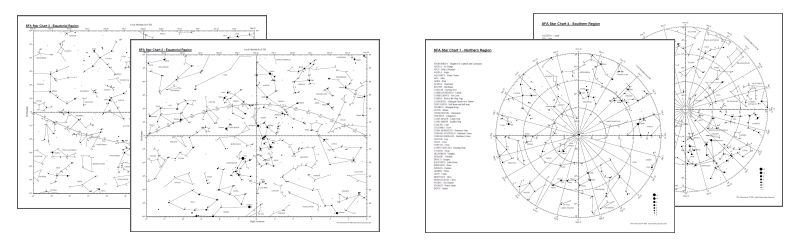
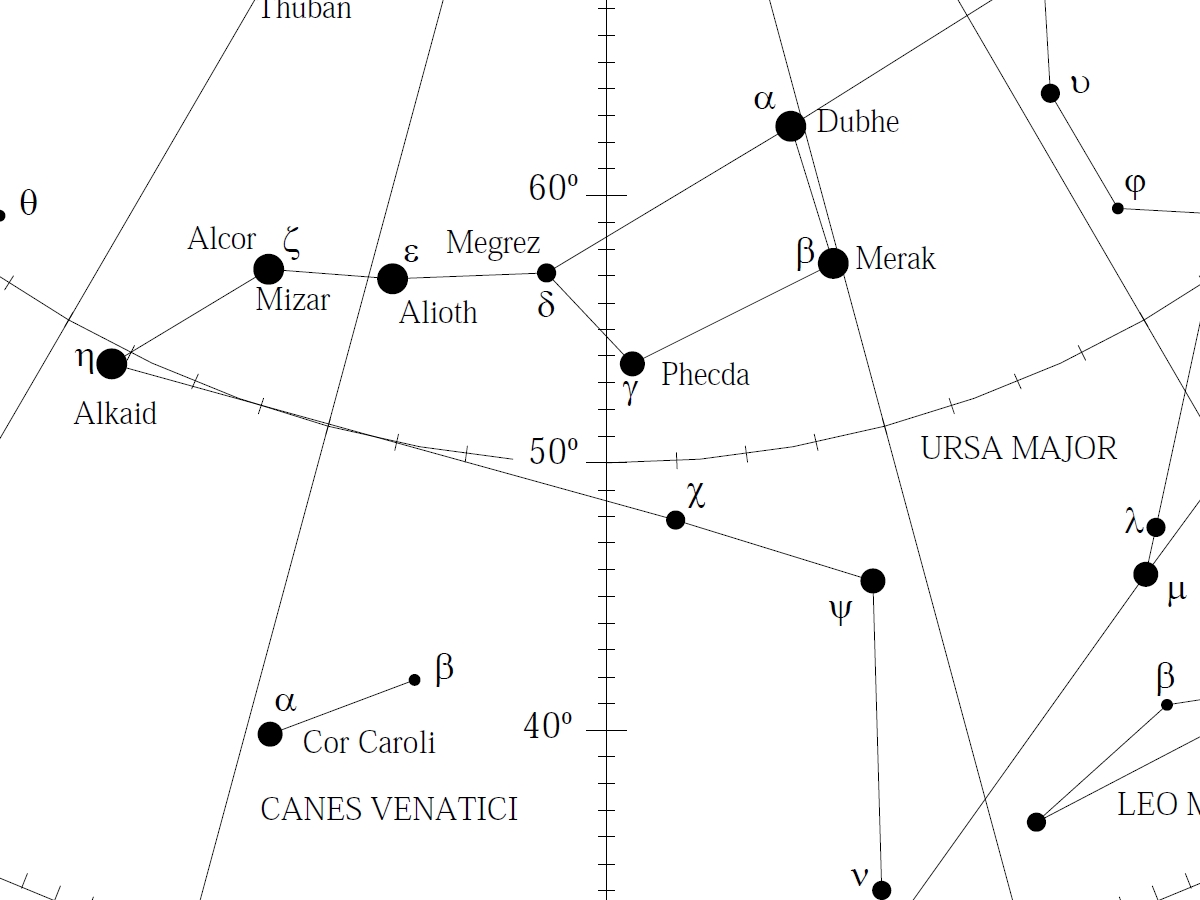
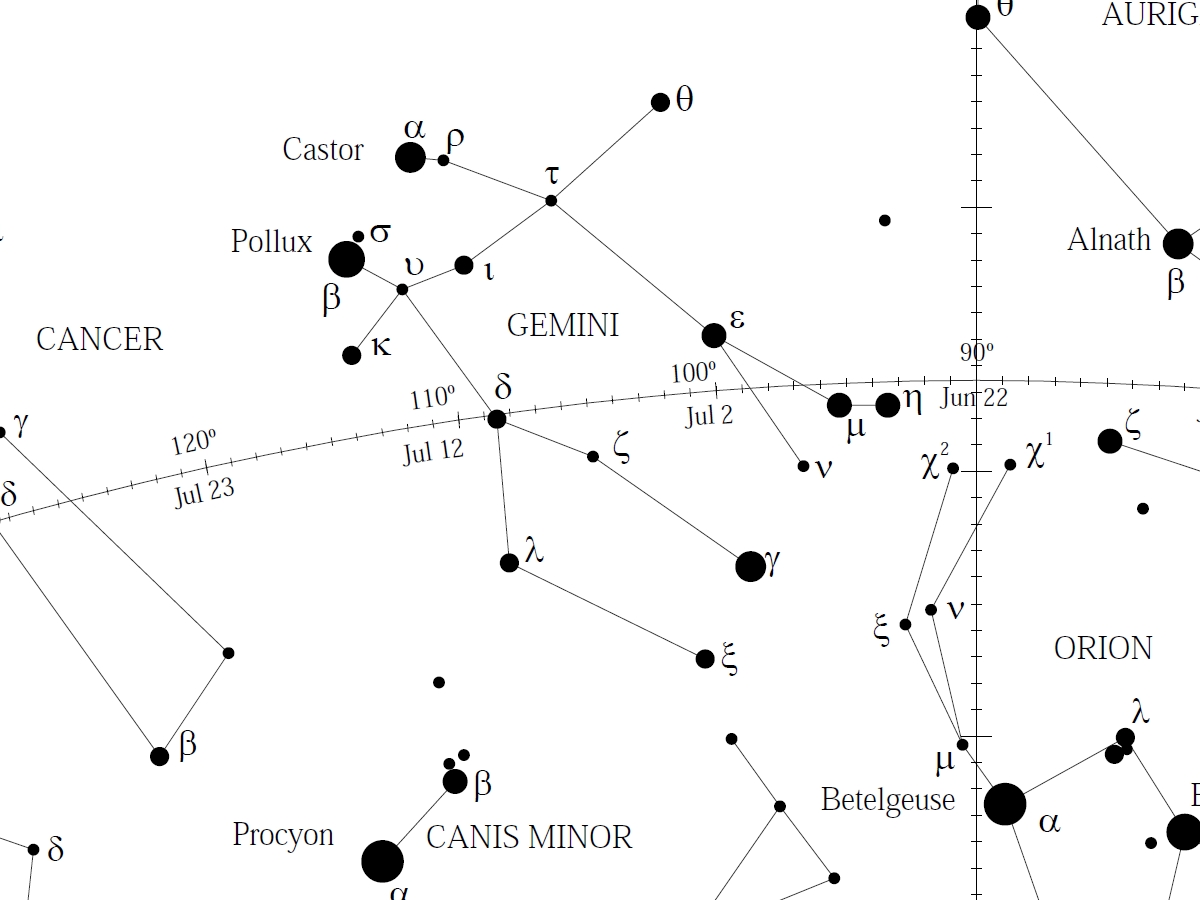
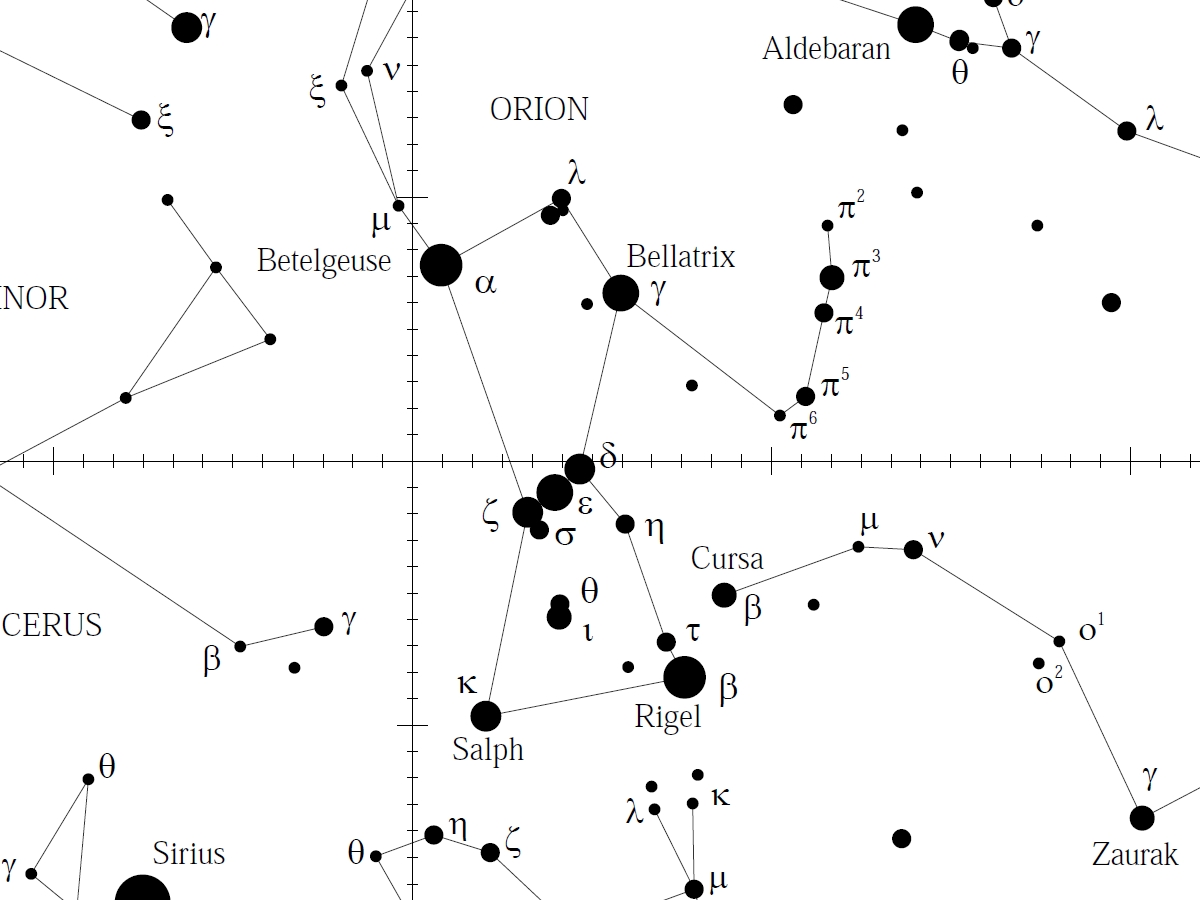
- Free SFA Star Charts
- Astronomy Orb
- Mars
- Jupiter
- Saturn
- SL9
- Eclipsing Binary Stars
- Color Science
- Astronomy JavaScript
- Movie Collection
- Stepper Motors